Low-Buy Year Challenge: Rules, Benefits, and How to Actually Stick With It
Last verified: September 2026.
A low-buy year is a twelve-month commitment to sharply reduce purchases in one or more specific categories — typically clothing, beauty products, home decor, or hobby supplies — while still allowing planned, intentional purchases within clear limits. Unlike a strict no-spend month, it is not a total freeze; it is a longer, more flexible reset aimed at breaking a pattern of frequent, low-value purchases. This guide covers how a low-buy year differs from a full no-buy year, how to set personal rules in advance, and what tends to make a year-long commitment fall apart.
Quick Answer: A low-buy year means picking one or more spending categories, setting a specific numeric limit for the year (such as “five new clothing items” rather than “buy less”), writing down what still counts as an approved exception, and checking in quarterly rather than waiting until December to see how it went. It differs from a no-buy year, which allows zero purchases in the chosen category for the full twelve months.
Low-Buy vs. No-Buy: What’s the Difference
These two challenges are often used interchangeably online, but they describe different levels of restriction:
| Challenge | Rule | Best For |
|---|---|---|
| Low-buy year | A set, limited number of purchases allowed in a category for the year (e.g., 5 clothing items, 3 new books) | Most beginners; allows planned exceptions and special occasions |
| No-buy year | Zero purchases allowed in a category for the full year, with no planned exceptions | People who have already tried a low-buy year and want a stricter version |
| Category-specific low-buy | Restricts only one narrow category (e.g., makeup, shoes) while leaving the rest of the budget unchanged | People targeting one specific area of overspending rather than a whole lifestyle change |
Why a Full Year (and Why It’s More Flexible Than It Sounds)
A year gives enough time for a habit to genuinely change, not just pause temporarily. Research from University College London on habit formation found that new behaviors became automatic anywhere from 18 to 254 days depending on the behavior and the person, with an average around 66 days; a 12-month challenge comfortably covers even the slower end of that range, which a single no-spend month does not. The flexibility built into a low-buy year (a numeric limit rather than a total ban) is also part of what makes it sustainable for this long: a rule that allows a few planned purchases is easier to maintain for twelve months than an absolute restriction that a single slip can feel like it has broken entirely.
There is also a reason beyond the household budget to care about this, particularly for clothing: the EPA estimated that the generation of textile waste in the U.S. reached 17 million tons in 2018, with 11.3 million tons of that going to landfills. A low-buy year aimed at clothing reduces both spending and the pace of that waste for the household running it, even though neither effect alone is large on a national scale.
Setting Personal Rules Before Day One
The specific numbers matter less than having specific numbers at all. A workable rule set answers these questions in writing before the year starts:
| Category | Example Low-Buy Limit | Example Approved Exception |
|---|---|---|
| Clothing | 5 new items for the year | Replacing an item that is worn out or no longer fits for a documented reason |
| Beauty and personal care | Finish current products before buying replacements; 2 new items allowed | A specific product runs out and has no substitute already on hand |
| Home decor | 3 new items for the year | A gift received counts separately from the purchase limit |
| Hobby supplies | A fixed dollar amount for the year instead of an item count | Supplies for a planned, specific project decided at the start of the year |
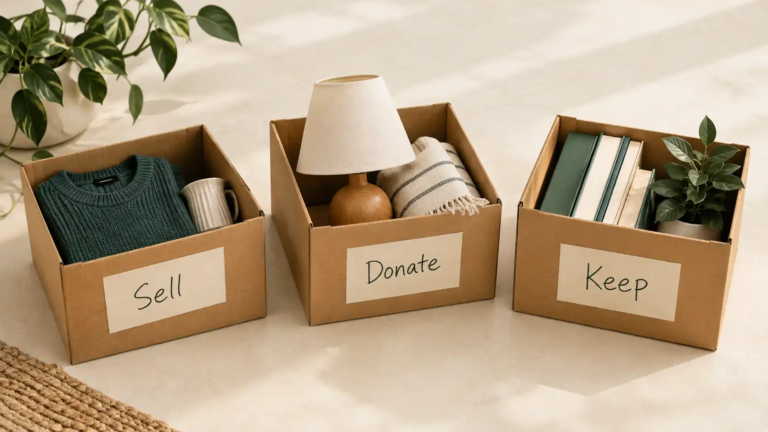
A useful general rule across categories is “one in, one out”: a new item is only purchased if an equivalent old item is donated, sold, or discarded at the same time. This keeps the total amount owned from growing even within the allowed purchase limit.
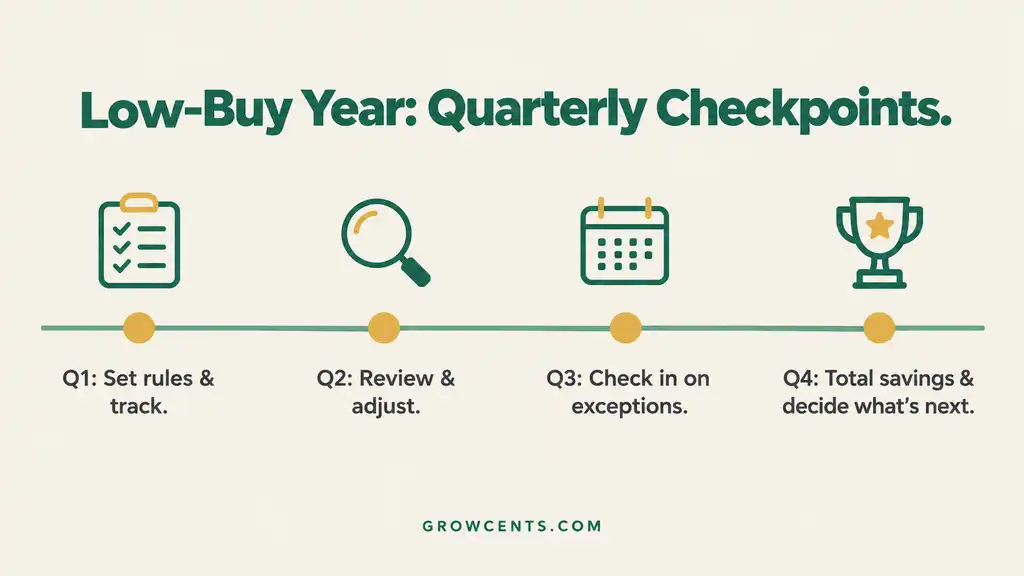
Low-Buy Year: Quarterly Checkpoints — Infographic
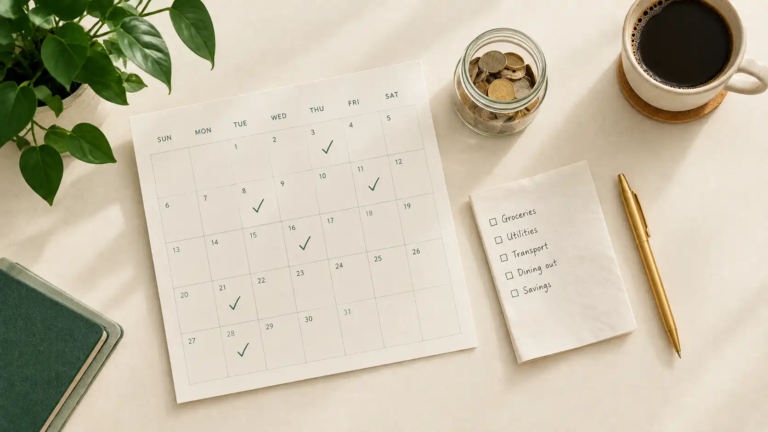
Checking In Quarterly Instead of Waiting Until December
- Q1: Confirm the rules are actually realistic once real life has tested them; adjust a limit now rather than abandoning the challenge entirely if it was set too strictly.
- Q2: Review how many of the allowed purchases have been used and whether any approved-exception purchases have crept beyond the original definition.
- Q3: Check in on upcoming events (holidays, a wedding, a wardrobe-dependent life change) that may need a planned exception, rather than treating them as a surprise in Q4.
- Q4: Total what was not spent compared to a typical year, and decide whether to continue the challenge, loosen it, or make part of it permanent.
Common Pitfalls Over a Full Year
- Rules that are too vague to enforce. “Buy less” has no clear violation point; a numeric limit does.
- No tracking system. Without a running list of purchases against the limit, it is easy to lose track of how many “exceptions” have actually been used.
- Treating every gift or hand-me-down as a loophole. Deciding in advance whether gifted items count toward the limit avoids a gray area that can quietly undermine the whole challenge.
- Abandoning the whole year after one rule-breaking purchase. A single purchase outside the plan does not have to end a 12-month commitment; adjusting and continuing matters more than perfection.
- Picking too many categories at once. Restricting clothing, beauty, home decor, and hobby supplies simultaneously in a first attempt is harder to sustain than starting with one.
What to Do With the Money Saved
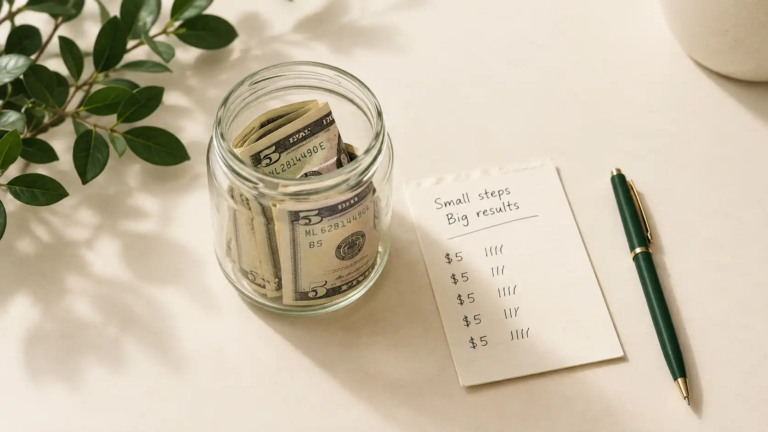
As with other savings challenges, deciding on a destination before the year starts makes the savings more likely to actually accumulate rather than drift into other spending. A common approach is directing the money toward a starter emergency fund or debt payoff for the first few months, then reassessing the goal once a clearer picture of the year’s total savings emerges. Logging what would have been spent (even roughly) alongside what was actually spent gives a concrete number to work with at the Q4 review.
Frequently Asked Questions
Is a low-buy year the same as being extremely frugal all year?
No; a low-buy year targets specific categories, usually discretionary ones like clothing or decor, while the rest of the household budget continues as normal. It is narrower than a general frugal living approach, which applies across many categories at once.
What counts as a “purchase” for the challenge?
This is a rule each household should define upfront: whether secondhand items, items bought with gift cards, or items received as gifts count toward the limit is a common early decision point that avoids disputes later in the year.
Can a low-buy year include non-clothing categories?
Yes; while clothing is the most common target, the same structure (a numeric limit, defined exceptions, quarterly check-ins) applies to books, home goods, hobby supplies, or any category with a pattern of frequent, low-value purchases.
What happens if the limit is reached early in the year?
Some households build in a small reserve for genuine emergencies within the category (a broken winter coat, for example); others simply treat reaching the limit early as a sign to tighten the following year’s rules.
Is a low-buy year worth trying before a stricter no-buy year?
For most people starting out, yes; a low-buy year tests whether the category and rules are realistic before committing to a stricter, zero-exception version.
How This Guide Was Built
This guide was researched using official government data and published academic research rather than personal anecdote or invented statistics. Textile waste figures come from the U.S. Environmental Protection Agency’s materials and waste data. The habit-formation timeframe referenced draws on University College London’s coverage of the Lally et al. (2009) study. The savings-planning framework references the Consumer Financial Protection Bureau’s Your Money, Your Goals toolkit. GrowCents’ full research and sourcing approach is described on the Editorial Policy page and the About page.
Minimalist vertical Pinterest graphic with a deep green background and cream typography. The headline reads “THE 30-DAY NO NEW CLOTHES RESET.” A gold outlined calendar highlights the number 30. Below it, the caption says, “One month. No new clothes. See what you actually wear.” “GROWCENTS” appears at the bottom in small gold text.This article is general educational information, not personalized financial advice, and does not account for any individual household’s full financial situation. See the Disclaimer page for details.