
Envelope Budgeting Method: Does It Still Work in the Digital Age?
Last verified: September 2026.
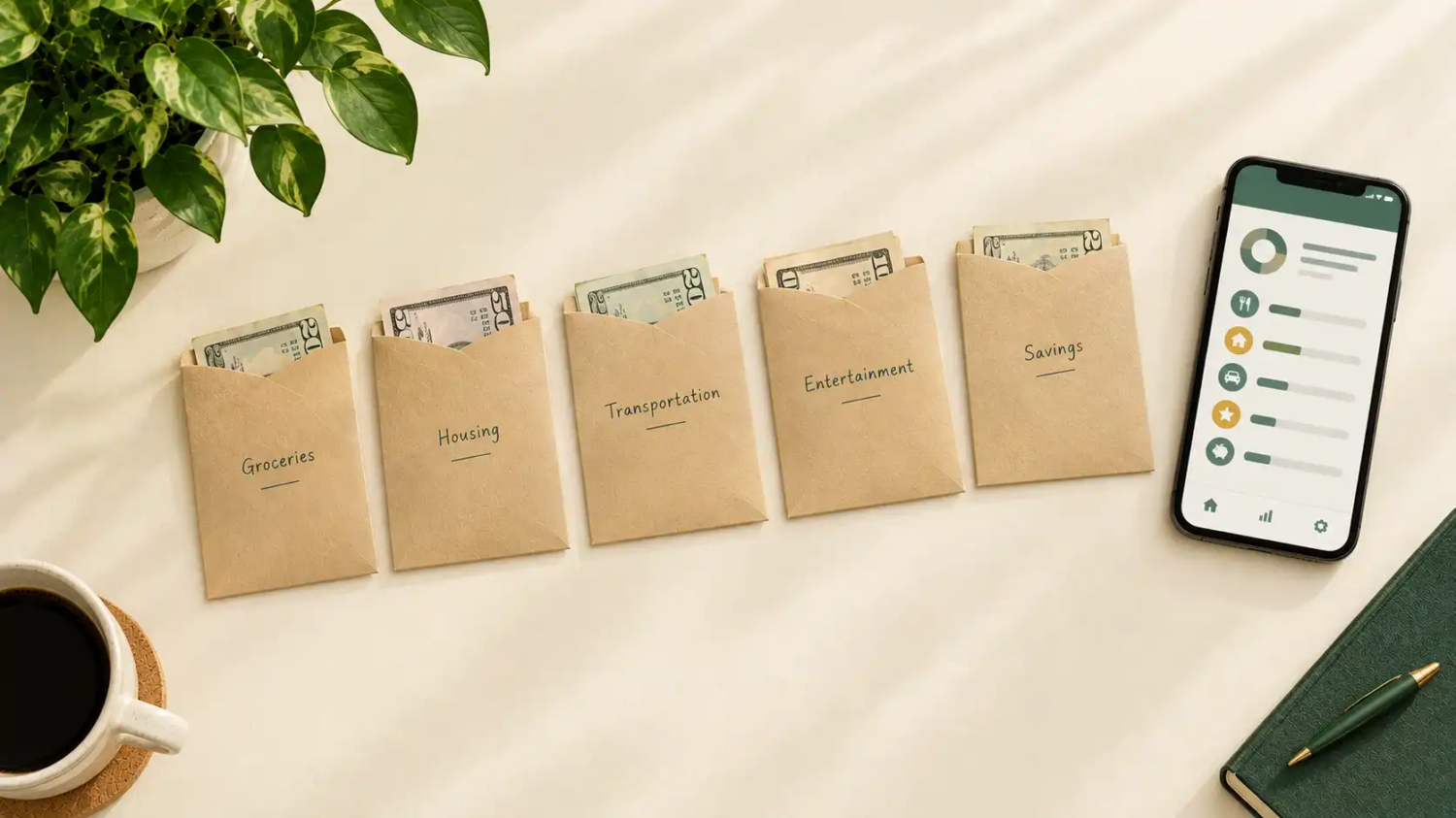
The envelope method is one of the oldest budgeting systems in personal finance: each spending category gets its own envelope of cash, and when an envelope is empty, spending in that category stops until the next payday. It is simple enough to explain in one sentence, which is both its strength and the reason people question whether it still makes sense in a world of cards, apps, and online shopping. This guide explains how the method works, what the research says about why it can help, how much cash people still use, where it falls short, and how to adapt it.
Quick Answer: Yes, the envelope method still works, because its real mechanism is a hard limit for each spending category, not the paper envelope itself. A cash version works best for variable categories like groceries, dining out, and personal spending, while fixed bills are better paid automatically. A digital or hybrid version, using a budgeting app, a bank’s built-in buckets, or a spreadsheet, keeps the same limit without carrying cash, which matters because cards and online payments now cover most purchases. The main trade-offs are rigidity and the risks of carrying cash.
How the Envelope Method Works
- Pick the categories that tend to overspend. Groceries, dining out, fuel, entertainment, and personal spending are common choices.
- Set a limit for each category, based on the household budget.
- Fund the envelopes on payday. In the cash version, the amount for each category is withdrawn and placed in its envelope.
- Spend only from the matching envelope. When it is empty, spending in that category stops.
- Decide in advance what happens when an envelope runs out, and what happens to money left over at the end of the cycle.
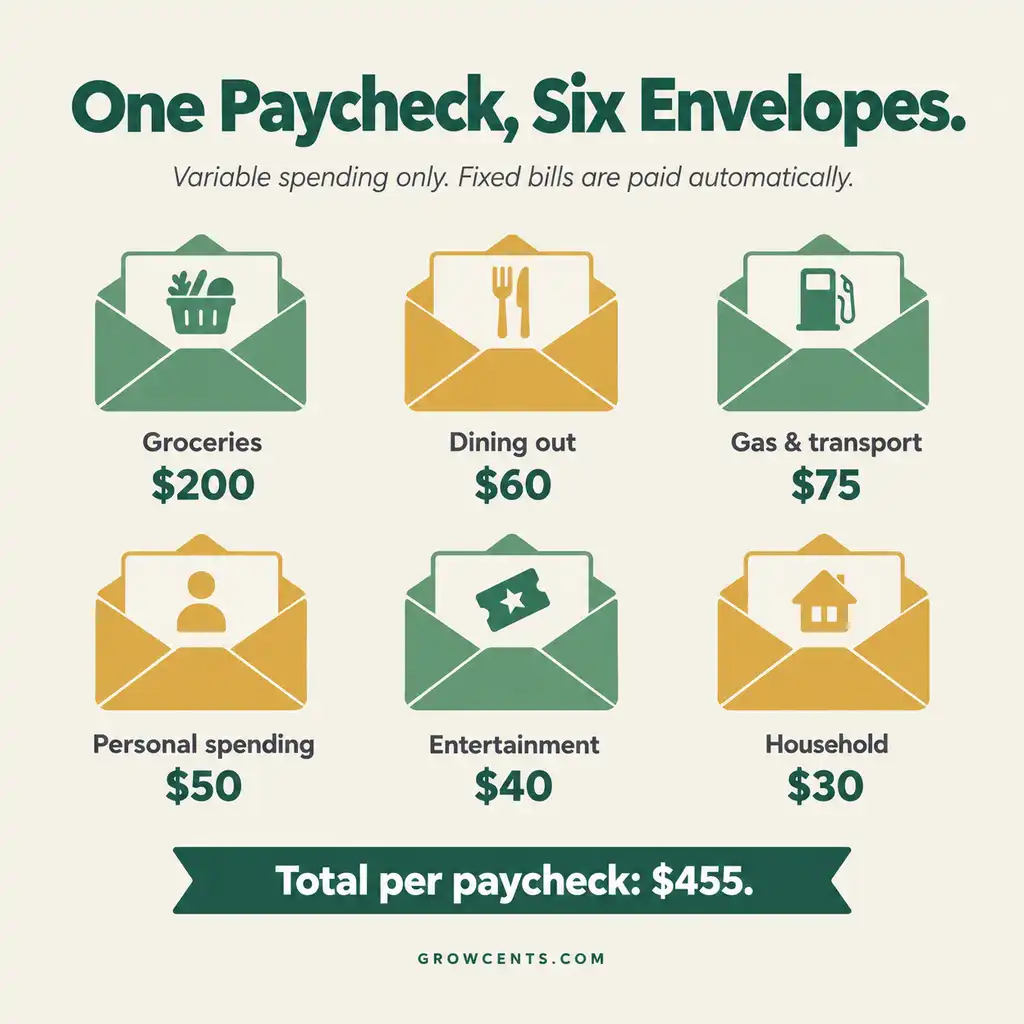
Fixed bills such as rent, insurance, utilities, and loan payments are normally not put in envelopes. They are paid electronically, and only the flexible, easy-to-overspend categories get cash limits. The example below is for a household paid twice a month, with all figures illustrative.
| Envelope | Monthly Amount | Per Paycheck (Paid Twice a Month) |
|---|---|---|
| Groceries | $400 | $200 |
| Dining out | $120 | $60 |
| Gas and local transport | $150 | $75 |
| Personal spending | $100 | $50 |
| Entertainment | $80 | $40 |
| Household supplies | $60 | $30 |
| Total | $910 | $455 |
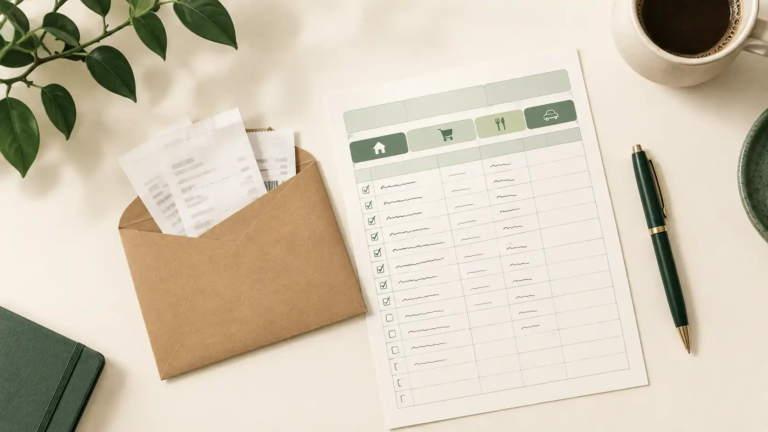
Payday Split Into Envelopes — Infographic
Why It Can Work
Two ideas from behavioral research explain the appeal. The first is mental accounting, developed by economist Richard Thaler and recognized in his 2017 Nobel Prize. As the Nobel committee’s summary puts it, people simplify financial decisions by creating separate accounts in their minds and judging each decision by its effect on one account rather than on total wealth. An envelope turns that mental habit into a physical or digital one: each category has its own visible pot with a clear limit.
The second idea is the transparency of cash. In an auction experiment, MIT researchers Drazen Prelec and Duncan Simester found that participants told to pay by credit card bid nearly twice as much for sporting event tickets as those told to pay in cash, as summarized by Michigan State University Extension. A separate study by Priya Raghubir and Joydeep Srivastava, in the Journal of Experimental Psychology: Applied and summarized by strategy+business, found that the more transparent the form of payment, the more frugal participants tended to be. Both were lab experiments with student or MBA participants, so they show a tendency in controlled settings rather than a guaranteed result for any household. They do help explain why handing over physical cash can feel different from tapping a card.
Does Cash Still Make Sense?
The Federal Reserve’s annual Diary of Consumer Payment Choice gives a current picture. In its 2026 findings, covering payments made in 2025, consumers made an average of 47 payments a month, including 16 by credit card, 15 by debit card, and six in cash, with four out of five consumers using cash at least once in the prior 30 days. A companion Federal Reserve summary shows cash payments averaged 14 a month in 2016, so everyday cash use has fallen sharply, and the share of people naming cash as their preferred in-person payment method has dropped to 16%.
Two conclusions follow. Cash is still widely used and easy to obtain, so a cash envelope system is practical for many categories. But online purchases, subscriptions, and many everyday transactions require a card or electronic payment, so a purely cash system cannot cover every part of a modern budget. That is why most people now use envelopes for a few in-person categories, or use digital envelopes for the rest.
Cash, Digital, or Hybrid Envelopes
| Version | How It Works | Strengths | Weaknesses |
|---|---|---|---|
| Cash envelopes | Withdraw cash for each category and spend only from the matching envelope | Very visible limit; no tracking needed; no accounts or logins | Risk of loss or theft; hard to use for online purchases; ATM trips and fees |
| Digital envelopes | An app, a bank’s buckets feature, or a spreadsheet tracks a balance for each category (see the envelope budgeting apps guide) | Works with cards and online spending; automatic balances; easy to adjust | Less tangible; depends on software and discipline to log purchases |
| Hybrid | Cash envelopes for a few in-person categories, digital tracking for everything else | Keeps the tactile benefit where it matters most, covers online spending | Two systems to maintain |
For many households, a hybrid approach is the most realistic: cash for the two or three categories that cause the most overspending, such as dining out and personal spending, and a digital system for groceries and other card-based categories.
How to Set Up a Cash Envelope System
- Find out where money actually goes. A 30-day spending tracker shows which categories to put in envelopes and what a realistic limit is.
- Set limits from the budget. Use the numbers from a zero-based budget or the 50/30/20 rule, and keep limits realistic rather than aspirational.
- Withdraw once per pay period. One planned withdrawal right after payday avoids repeated ATM trips and fees.
- Label envelopes clearly and keep them in one safe place. Many people carry only the envelopes they need that day.
- Decide the rules for shortfalls and leftovers before they happen, as covered below.
- Review at the end of each month. Adjust limits that were consistently too high or too low.
When an Envelope Runs Out
| Option | How It Works | Trade-Off |
|---|---|---|
| Stop spending | No more spending in that category until the next payday | Strictest, and the most effective at building discipline, but can be inconvenient |
| Borrow from another envelope | Move money from an envelope with room, and note the transfer | Flexible, but easy to abuse if it becomes routine |
| Use an “oops” envelope | A small envelope funded each payday for genuine surprises | Absorbs small shocks, but needs its own limit |
Safety and Practical Issues
Leftover money is a similar decision. Some people let it roll over to the next cycle, while others move it to savings, such as a starter emergency fund, to reinforce the habit of spending less than the limit.
- Lost or stolen cash is generally gone. Cards come with federal limits on liability. The FTC explains that credit card liability for unauthorized charges is capped at $50, and debit card losses are limited depending on how quickly the problem is reported, with no equivalent protection for cash. Keeping envelope amounts small and not leaving cash in cars or unattended bags reduces the risk.
- Avoid ATM fees. Withdrawing from the household’s own bank’s machines, once per pay period, keeps fees down.
- Do not hold large amounts at home. Cash envelopes are for spending money, not for savings.
- Keep a record of the withdrawal. Counting the cash withdrawal as the category’s spending in the budget keeps the numbers accurate.
Where the Method Falls Short
- Rigidity. The same mental accounting that makes envelopes effective can create waste. The Nobel committee’s summary notes that separating money into mental accounts can lead to extra costs, such as not tapping long-term savings for a short-term need and instead taking an expensive loan. A hard envelope can similarly leave one category with unused cash while another runs short.
- Irregular expenses. Annual and seasonal costs do not fit a pay-period envelope and belong in a sinking fund tracker.
- Online spending. Subscriptions, online orders, and many bills cannot be paid in cash, so those categories need a digital limit.
- Shared finances. Couples need to agree on who handles which envelopes, as discussed in the couples budgeting guide.
- Variable income. Envelopes work best with a predictable paycheck; the baseline method in the guide to budgeting on variable income can set the amounts when pay swings.
Common Mistakes
- Putting fixed bills in envelopes. Rent and insurance are better handled automatically; envelopes work best for flexible categories.
- Setting limits that are too tight. An unrealistic limit leads to constant borrowing between envelopes, which defeats the purpose.
- Making too many envelopes. Four to six categories is easier to manage than fifteen.
- Treating the envelope as the goal. The point is the limit, so a digital system that enforces the limit is just as valid as paper.
- Refilling an empty envelope mid-cycle. Topping up from checking cancels the limit.
- Carrying too much cash. Large amounts raise the cost of a loss.
Frequently Asked Questions
Does the envelope method work for people who rarely use cash?
Yes, in a digital form. A budgeting app, a bank’s buckets feature, or a spreadsheet can track a balance for each category that only goes down as money is spent, which keeps the same limit without the paper.
How many envelopes should I start with?
Many people start with the two or three categories where overspending is most common, such as dining out, groceries, or personal spending, and add more only if the method is working.
Should savings go in an envelope?
Savings usually belong in a bank account, not in cash at home, ideally set up as an automatic transfer on payday so the money moves before it can be spent.
Is the envelope method better than other budgeting methods?
It is not better in general, but it can be better for people whose main problem is overspending in specific categories. Others may prefer a zero-based or percentage-based approach, or a combination.
What if my envelope runs out before payday?
The decision should be made in advance. Stopping spending, borrowing from another envelope with a note, or drawing on a small buffer envelope are the common options, and each has trade-offs.
How This Guide Was Built
This guide was researched using Federal Reserve data, university and extension sources, and consumer protection agencies rather than personal anecdote or invented statistics. The mental accounting concept comes from the Nobel Prize’s 2017 Economic Sciences popular summary. The cash-versus-card research comes from Michigan State University Extension and strategy+business, both summarizing laboratory experiments rather than field studies of budgeting. Payment-use figures come from the Federal Reserve’s 2026 Diary of Consumer Payment Choice and its companion summary. Card liability limits come from the FTC’s lost or stolen card guidance. The envelope amounts in the tables are illustrations built for this guide, calculated directly and not sourced data. GrowCents’ full research and sourcing approach is described on the Editorial Policy page and the About page.
This article is general educational information, not personalized financial advice, and does not account for any individual household’s full financial situation. See the Disclaimer page for details.



One Comment
Comments are closed.